The CIP analyses the development of padel in the United States in a new edition of GeoPadel
In the latest issue of Padel Cluster Magazine, the International Padel Cluster (CIP) dedicates the GeoPadel section to the analysis of the padel market in the United States, a country that has established itself as one of the territories with the greatest growth potential worldwide for the padel industry.
Below, you can read the full article, produced jointly with Padel Lands, the world’s leading online platform for padel courts, which analyses the evolution of the number of courts, the predominant club models, territorial distribution, the role of club chains, the professionalisation of the ecosystem, and the key factors driving the development of padel in the United States.
Padel in the United States continues on an upward trajectory that, while not explosive, shows strong, steady and increasingly accelerated growth. The country has become one of the most strategic markets for the global industry: major projects, strong investment groups and expanding club chains are shaping an ecosystem with unprecedented potential.
In just three years, the growth is extraordinary: from 103 courts in 2022 to 772 in 2025. This evolution positions the United States as the world’s fastest-growing and highest-potential padel market.
A high-end club model
The type of facilities being developed in the U.S. consistently follow premium standards. These are clubs with high-quality complementary services -fitness, wellness, food & beverage- and a concept closer to a lifestyle sports center than a traditional club.
While there are padel-only clubs, most new venues combine padel, pickleball and tennis, offering a multisport experience that aligns with U.S. consumer behaviour.
Geographic distribution: Florida still leads the way
Although padel is spreading to more states, Miami and Florida continue to drive the highest concentration of clubs and courts. Florida is home to Ultra Padel Club, currently the largest padel facility in the country, with 29 courts in various formats.
Climate, demographics and leisure-investment patterns explain this regional dominance, though expansion into new areas remains strong and consistent.
Indoor vs. outdoor: the challenge of real estate costs
One of the main obstacles in the U.S. market is the high cost of land and industrial buildings required for indoor clubs. Historically, more indoor courts have been built than outdoor ones, but the gap is narrowing as new projects emerge, particularly in states with favourable climates.
Coaches and training: an unexpected competitive advantage
Unlike other markets, the United States currently has a large number of certified padel coaches —in fact, more than the number of active clubs. This gives new projects a considerable advantage: the talent is ready before the infrastructure, allowing clubs to scale faster once they open.
Club chains and the rise of multi-location models
Several club chains are already shaping a national expansion strategy, contributing to market professionalisation and drawing in new investment. Key examples include:
- Padel Haus
- Reserve Padel
- Racket Social Club
Events, visibility and the power of celebrity
The U.S. has built its own padel event ecosystem. The Pro Padel League and Reserve Cup have grown significantly in visibility and, in 2025, even expanded internationally.
The U.S. has become one of the most strategic markets for padel: major projects, specialized investment groups, and expanding club chains are shaping an ecosystem with unprecedented potential.
On the industry side, RacquetX has positioned itself as the leading multi-racquet sports event in the country, with its major 2026 edition scheduled in Fort Lauderdale and the successful RacquetX City Series tour across multiple states.
Public figures -including actress Eva Longoria and baseball legend Derek Jeter- have played an essential role in driving awareness and adoption of padel nationwide.
Conclusion: the most promising market on the planet
The United States is heading toward a scenario in which padel will not only grow in volume but will also advance in sophistication, investment and professional standards. If current forecasts materialise, the U.S. market could reshape the global padel landscape in the coming decade.
The U.S. is no longer an emerging market: it is the primary engine of international padel growth.
If you want to share... 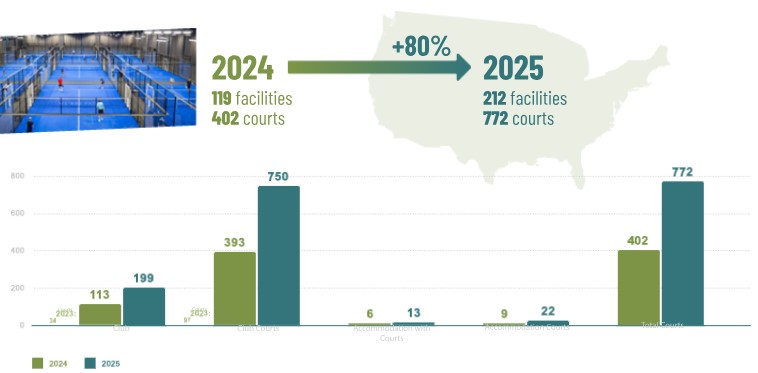

 ENGLISH
  ESPAÑOL